The aroma of freshly baked bread is undeniably one of life’s simple pleasures, and for many home bakers, the dream of crafting that perfect loaf often comes with the challenge of kneading. Hand mixers, with their seemingly versatile array of attachments, including dough hooks, often pose a tempting question: can this countertop workhorse handle the rigorous task of kneading bread dough? As someone who has spent over a decade navigating the nuances of hand mixers, I’m here to unpack the truth about dough hooks and whether your trusty hand mixer is truly up to the bread-making challenge.
Understanding Dough Hooks: More Than Just a Whisk
Dough hooks are specialized mixer attachments designed to replicate the rhythmic push and fold action of hand kneading, a crucial step in developing the gluten structure that gives bread its characteristic chewiness and rise. Unlike the aerating action of traditional beaters or whisks, dough hooks are shaped to pull, stretch, and fold dense mixtures, integrating ingredients thoroughly while building elasticity in the dough. You’ll typically find two main shapes: the C-shaped hook, which pushes dough against the sides of the bowl, and the spiral hook, which works by pushing dough off the bottom. These attachments are essential for any baker looking to streamline the preparation of heavier doughs like those for bread, pizza, or pasta.
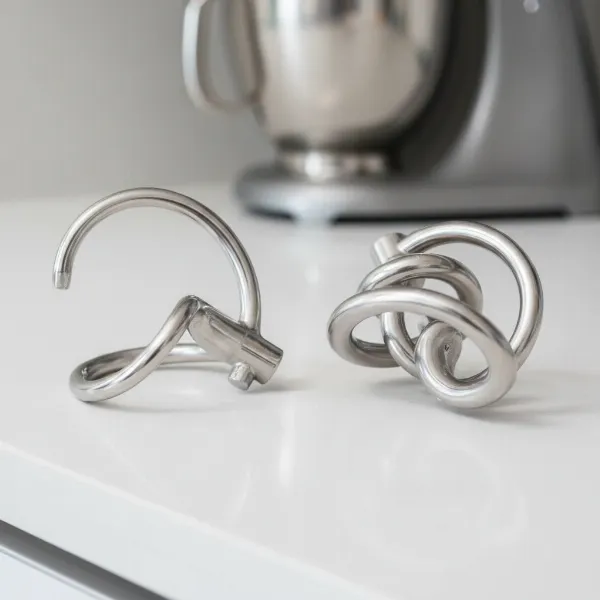 Close-up of C-shaped and spiral dough hooks for a hand mixer, highlighting their unique designs
The Great Debate: Can Hand Mixers Truly Knead Bread?
This is where the baking community often finds itself divided. Many culinary experts and experienced bakers firmly state that hand mixers, even with dough hooks, are generally not the ideal tool for kneading dense bread dough. Their primary concern revolves around the motor: hand mixers are designed for lighter tasks like whipping cream or mixing cake batter. Bread dough, particularly stiff varieties with low hydration, places immense strain on the motor, leading to overheating, potential burnout, or damaged internal gears. You might find the dough quickly gums up around the hooks and mixer body, making the process more frustrating than helpful.
However, a contingent of home bakers successfully uses their hand mixers for certain doughs. This “yes, but” camp highlights specific conditions under which a hand mixer can perform adequately. These typically involve smaller batches, higher hydration doughs (those with more water, making them stickier and less stiff), and more robust hand mixer models. For softer doughs, like brioche or some enriched bread rolls, a powerful hand mixer might manage the initial mixing and light kneading required. Yet, for traditional, firm bread doughs that demand extensive gluten development, the limitations often outweigh the benefits.
Factors Determining Hand Mixer Dough Kneading Success
If you’re determined to put your hand mixer to the test, understanding the critical factors that influence its performance is key to avoiding disappointment—or worse, a burnt-out appliance.
- Hand Mixer Power (Wattage): A higher wattage generally translates to a more robust motor capable of handling tougher tasks. While many hand mixers range from 150-250 watts, for any attempt at kneading dough, you’ll want a model closer to 300 watts or even higher. A powerful motor provides more torque, reducing strain when battling stiff dough.
- Dough Hydration: This is perhaps the most significant factor. Wetter doughs, typically 60% hydration or more, are far more pliable and less strenuous for a hand mixer to work. Trying to knead a very stiff, low-hydration dough with a hand mixer is almost guaranteed to lead to a struggling motor and poor results.
- Batch Size: Hand mixers are not designed for large quantities. Stick to small batches—think one standard loaf’s worth of dough, not a baker’s dozen. Overloading the mixer with too much dough instantly increases the stress on the motor.
- Mixer Quality and Design: Not all hand mixers are created equal. Models with metal gears tend to be more durable than those with plastic components, which can melt or strip under heavy load. A well-built mixer from a reputable brand offers a better chance of survival when tackling dough.
- User Technique: How you operate the mixer plays a crucial role. Applying too much pressure, rushing the process, or continuously running the mixer at high speed for extended periods can quickly lead to overheating.
Optimizing Your Hand Mixer for Dough (If You Dare!)
For those who wish to venture into hand mixer dough kneading, here are some tips to maximize your chances of success and protect your appliance:
- Start with the Right Dough: Choose recipes for wetter, softer doughs, such as focaccia, ciabatta, or soft dinner rolls. Avoid dense rye breads or bagels.
- Work in Small Batches: Divide larger recipes into smaller, manageable portions if necessary. Never fill your mixing bowl more than halfway with dough.
- Gradual Ingredient Addition: Begin by mixing the wet ingredients, then gradually add the flour. This helps prevent thick lumps that can immediately strain the mixer.
- Control Speed and Time: Start on the lowest speed to combine ingredients, then move to a medium-low setting (Speed 2 is often recommended for stand mixer dough hooks). Do not run the mixer continuously for long periods. Instead, knead for 2-3 minutes, give the mixer a short break, scrape down the bowl, and then continue. Aim for short bursts, generally not exceeding 10 minutes of total mixing time to prevent overheating.
- Monitor Your Mixer: Pay close attention to the sound and feel of your hand mixer. If it sounds strained, heats up excessively, or slows down significantly, stop immediately. It’s better to finish by hand than to burn out the motor.
- Check for Dough Development: Your dough is ready when it starts to pull away cleanly from the sides of the bowl and feels smooth and elastic. You might also notice it clinging to the dough hooks in a cohesive mass.
- Strengthen Weak Flour: If you’re working with lower-protein flour, consider adding a tablespoon of vital wheat gluten per recipe to aid in gluten development, or a tiny amount of vinegar per 1000g of flour, which can subtly improve gluten structure.
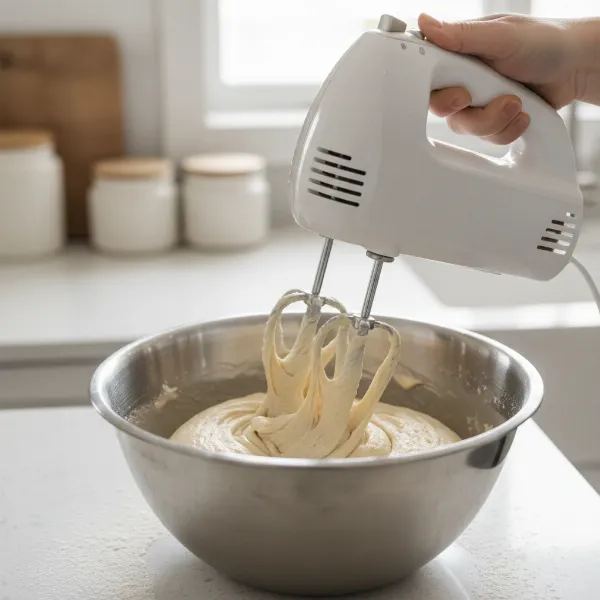 A hand mixer with dough hooks gently kneading a soft, high-hydration bread dough in a mixing bowl.
When to Embrace Alternatives: Hand Kneading vs. Stand Mixers
While a hand mixer can be persuaded to handle certain doughs, it’s vital to recognize its limitations and when other tools are simply better suited for the job.
- Hand Kneading: This age-old method requires no special equipment, builds strength, and offers an intimate connection with your dough. It’s incredibly effective for all types of bread dough, ensures proper gluten development, and is surprisingly therapeutic once you get the rhythm. For many, it’s the gold standard.
- Stand Mixers: These are specifically engineered for heavy-duty tasks like kneading bread dough. With powerful motors, robust gear systems, and bowl-lift or tilt-head designs, stand mixers provide consistent, hands-free kneading, making them the superior choice for serious bread bakers. Their C-shaped or spiral dough hooks are built to endure the resistance of dense dough, allowing for optimal gluten formation without stressing the appliance.
Choosing a Hand Mixer with Dough Hooks: What to Look For
If a hand mixer is your primary mixing tool and you intend to use its dough hooks for occasional light dough work, prioritize these features:
- High Wattage: Look for models with at least 300 watts for better performance and durability.
- Multiple Speeds, including a “Slow Start” or “Low” Setting: A gradual start prevents ingredients from scattering, and precise speed control is beneficial when working with developing dough.
- Ergonomic Design: Since you’ll be holding it, comfort is crucial. Look for a balanced weight and a comfortable, non-slip grip.
- Durable Construction: While few hand mixers have all-metal gears, a sturdy build quality and a good warranty indicate better longevity.
- Attachments: Ensure it comes with sturdy dough hooks, not just thin wire beaters. Some popular models like the Cuisinart Power Advantage Plus, Breville Handy Mix Scraper, KitchenAid 9-Speed, and certain Hamilton Beach or Braun MultiMix hand mixers often come equipped with capable dough hooks.
Conclusion
So, can your hand mixer knead bread? The answer is nuanced: while many traditional, dense bread doughs truly demand the power and endurance of a stand mixer or the timeless art of hand kneading, a high-quality hand mixer with robust dough hooks can handle lighter, higher-hydration doughs in small batches. It’s about understanding the tool’s limitations and using it wisely to avoid damage. Ultimately, choosing the right equipment for the task ensures not only the longevity of your appliances but also the delicious success of your baking endeavors.
What are your experiences using a hand mixer for dough?
FAQ
Can I use my hand mixer’s dough hooks for all types of bread?
|
Our Picks for the Best Hand mixer in 2026
As an Amazon Associate I earn from qualifying purchases.
|
||
| Num | Product | Action |
|---|---|---|
| 1 | KitchenAid 5-Speed Ultra Power Hand Mixer |

|
| 2 | Hamilton Beach 6-Speed Electric Hand Mixer with Whisk, Traditional Beaters, Snap-On Storage Case, 250 Watts, White |
|
| 3 | KitchenAid 5-Speed Ultra Power Hand Mixer - KHM512, Contour Silver |
|
| 4 | Maestri House Rechargeable Milk Frother with Stand, LunaFro Handheld Electric Foam Maker Waterproof Detachable Stainless Steel Whisk Drink Mixer Foamer for Lattes, Cappuccino |
|
| 5 | OVENTE 5-Speed Corded Electric Hand Mixer with Stainless Steel Whisks, Compact Portable Design with Snap-On Storage Case,150W Lightweight Handheld Mixer for Baking & Cooking, White HM151W |
|
| 6 | KitchenAid 5 Ultra Power Speed Hand Mixer - KHM512, Aqua Sky |
|
| 7 | 600W Electric Hand Mixer Kitchen Handheld Mixer 10 Speed Powerful with Turbo for Baking Cake Lightweight & Personal Electric Mixer with Egg Baking Beaters Dough Hooks, Whipping Mixing Cookies |
|
| 8 | OVENTE 5-Speed Electric Hand Mixer with Stainless Steel Mixing Whisk, Snap-On Storage Case, Portable & Lightweight 150W Motor, Compact Handheld Mixer for Baking, Blending or Cooking, Red HM151R |
|
| 9 | Wellness Extract Multi-Speed Rechargeable Electric Milk Frother, Li-ion Battery Powered – Certified Safe, Ideal for Coffee, Matcha, Protein & Colostrum |
|
| 10 | OVENTE 5-Speed Corded Electric Hand Mixer with Stainless Steel Whisks, Compact Portable Design with Snap-On Storage Case,150W Lightweight Handheld Mixer for Baking & Cooking, Black HM151B |
|
No, hand mixer dough hooks are best suited for lighter, higher-hydration doughs like brioche, pizza dough, or soft dinner rolls. Stiff, low-hydration bread doughs, such as those for artisan sourdough or dense rye, are too challenging and can strain the mixer’s motor.
What is the best wattage for a hand mixer to knead dough?
For any attempt at kneading dough, look for a hand mixer with at least 300 watts of power. A higher wattage provides more motor torque, which is essential for working with thicker dough consistencies and helps to prevent overheating and premature wear on the appliance.
How long can I use my hand mixer continuously for dough?
To prevent motor burnout, avoid using your hand mixer continuously for more than 5-10 minutes when kneading dough. It’s best to work in short intervals, allowing the mixer to rest between bursts of kneading, and always monitor for signs of strain or excessive heat.
What are the signs that my hand mixer is struggling with dough?
Common signs that your hand mixer is struggling include a noticeably slower speed, a strained or whining motor sound, excessive heat emanating from the motor housing, or the dough gumming up around the hooks and chassis. If you observe these, stop immediately to prevent damage.