Ever get that sudden, intense craving for a loaf of warm, crusty, homemade bread? You can almost smell it. But then reality hits—the thought of spending 15 minutes kneading dough by hand, your arms aching, and your counter covered in flour. It’s enough to make you reach for the store-bought stuff. This leads many aspiring bakers to wonder, Can You Knead Bread With A Hand Mixer? As your resident kitchen gadget guru, I’m here to tell you that the answer is a resounding yes, you can… with a few very important caveats.
Let’s dive into how this humble appliance can become your bread-making sidekick, saving your arms and getting that perfect loaf into the oven faster.
So, What’s the Real Deal? Kneading Dough With a Hand Mixer
A hand mixer can absolutely be used to knead bread dough, especially for smaller batches and softer doughs. It’s a fantastic middle-ground between the intense labor of hand-kneading and the hefty investment of a stand mixer. The key is to use the right attachments—the corkscrew-shaped dough hooks—and to understand your mixer’s limits.
Think of it this way: a hand mixer does the initial heavy lifting. It brings the flour, water, yeast, and salt together into a shaggy mass and begins developing the gluten strands that give bread its structure. You’ll likely still need to finish the last minute or two by hand on a floured surface to get that perfectly smooth, elastic feel, but the mixer will have done about 80-90% of the work for you.
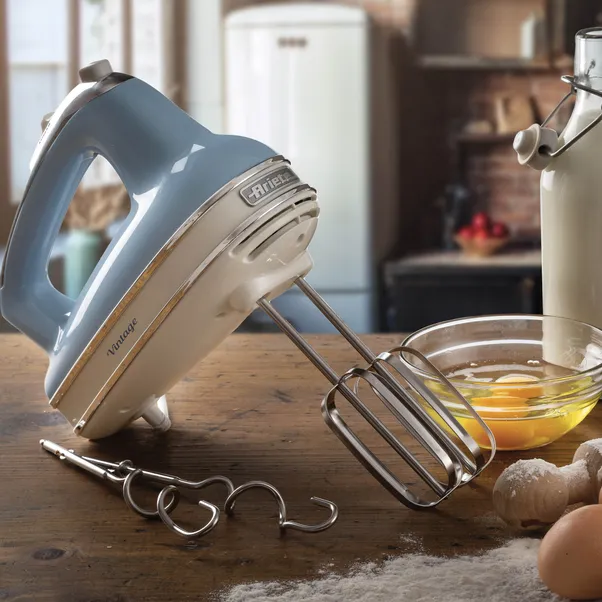
Your Step-by-Step Guide to Kneading With a Hand Mixer
Ready to give it a shot? It’s easier than you think. Let’s walk through the process together.
- Attach the Dough Hooks: First things first, unplug your mixer and insert the two dough hooks. Forget the standard beaters; they’ll just get tangled in the sticky dough and won’t knead a thing.
- Combine Your Ingredients: In a large, sturdy bowl, combine your dry ingredients. Create a well in the center and add your wet ingredients.
- The Initial Mix (Slow and Steady): Start your mixer on the lowest possible speed. This is crucial! A high-speed start will send a cloud of flour billowing through your kitchen. Trust me, I’ve made that mistake. Mix slowly until the ingredients are just combined and a shaggy dough forms.
- Increase the Speed: Once the flour is incorporated, you can bump the speed up to a low-medium setting. Move the mixer around the bowl, working the dough for about 2-3 minutes. You’ll see it start to come together and pull away from the sides of the bowl.
- Listen to Your Mixer: This is where you need to be a bit of a machine whisperer. A thick bread dough puts a lot of strain on a hand mixer’s motor. If you hear it straining, groaning, or getting excessively hot, give it a break for a minute. You don’t want to burn out the motor.
- The Finishing Touch: After 2-3 minutes with the mixer, the gluten is well on its way. Turn the dough out onto a lightly floured surface. It might still be a little sticky. Knead it by hand for another 1-2 minutes until it becomes smooth and elastic. It should spring back when you gently poke it.
- Let It Rise: Place the dough in a greased bowl, cover it, and let it rise as your recipe directs. You did it!
Choosing the Right Hand Mixer for the Job
Not all hand mixers are created equal, especially when it comes to tackling tough dough. If you plan on making bread regularly, here’s what to look for.
Power is Paramount
The single most important factor is the motor’s power, measured in watts. For kneading bread, you need a mixer that won’t give up halfway through.
- Under 250 Watts: These are great for cake batter and whipped cream, but they will likely struggle and overheat with bread dough.
- 250-350 Watts: This is the sweet spot for the occasional bread baker. Mixers in this range can handle softer doughs and smaller batches without too much strain.
- 350+ Watts: If you’re serious about your baking, a more powerful motor will provide the torque needed to handle even stiffer doughs, like those for bagels or whole wheat loaves.
Must-Have Features for Bakers
Beyond raw power, a few features can make your bread-making experience much smoother.
- Dough Hooks Included: This is non-negotiable. Ensure the model you choose comes with a sturdy pair of metal dough hooks.
- A Slow-Start Function: This feature gradually increases the speed, preventing that dreaded “flour explosion” when you first start mixing. It’s a kitchen-saver.
- Multiple Speed Settings: Having at least 5 speeds gives you the control to start slow and gradually increase as the dough comes together.
- Ergonomic Design: You’ll be holding this for a few minutes while it works a tough dough. A comfortable, non-slip grip can make all the difference.
|
Our Picks for the Best Hand Mixer in 2026
As an Amazon Associate, we earn from qualifying purchases.
|
||
| Num | Product | Action |
|---|---|---|
| 1 | Proctor Silex Easy Mix 5-Speed Electric Hand Mixer with Bowl Rest, Compact and Lightweight, 215 Watts of Peak Power, Storage Case, Black (62512) |

|
| 2 | KitchenAid 9-Speed Digital Hand Mixer with Turbo Beater II Accessories and Pro Whisk - Contour Silver |
|
| 3 | KitchenAid 5 Ultra Power Speed Hand Mixer - KHM512, Matte Black |
|
| 4 | Hand Mixer Electric Mixing Bowls Set, 5 Speeds Handheld Mixer with 4 Nesting Stainless Steel Mixing Bowl, Measuring Cups Spoons 200W Kitchen Blender Whisk Beater Baking Supplies For Beginner |
|
| 5 | Hand Mixer Electric, 450W Kitchen Mixers with Scale Cup Storage Case, Turbo Boost/Self-Control Speed + 5 Speed + Eject Button + 5 Stainless Steel Accessories, For Easy Whipping Dough,Cream,Cake |
|
| 6 | Hand Mixer Attachments Beater 6Pcs, Whisk, Blending Rod and Dough Hooks, Stainless Steel Hand Mixer Accessories for Kitchenaid Hand Mixers KHM3 KHM5 KHM7 KHM9, Dishwasher Safe |
|
| 7 | Hand Mixer Electric, 400W Food Mixer 5 Speeds Handheld Blender, 5 Stainless Steel Accessories, Storage Box, Kitchen Blender with Cord for Cream, Cookies, Dishwasher Safe, White |
|
| 8 | bella 3.5 Qt Hand & Stand Mixer, 2 in 1 Electric Mixer with Bowl, Dough Hook, Whisk & Egg Beater, Multifunctional Handheld Blender & Mixer for Baking, 200 Watt, Surf |
|
| 9 | Ninja Hand Mixer, Immersion Blender, Foodi Power Mixer System, 750-Peak-Watt Handheld Emulsion Blender & Electric Hand Mixer Combo With Whisk, Beaters & 3-Cup Blending Vessel,120 volts, Black CI101 |
|
| 10 | Cuisinart HM-90BCS Power Advantage Plus 9-Speed Handheld Mixer with Storage Case, Brushed Chrome |
|
As professional baker Michael Pham notes, “A good hand mixer with dough hooks is an incredibly versatile tool. For home bakers who don’t have the space or budget for a stand mixer, it’s the perfect way to get consistent results without the arm workout. Just remember to respect the motor—it’s powerful, but it’s not invincible.”
Hand Mixer vs. Stand Mixer vs. Good Old-Fashioned Elbow Grease
How does using a hand mixer stack up against the other methods? Let’s break it down.
| Feature | Hand Mixer | Stand Mixer | By Hand |
|---|---|---|---|
| Cost | Low ($30 – $80) | High ($200 – $600+) | Free! |
| Effort | Low | Very Low (hands-free) | High |
| Storage | Very Easy (fits in a drawer) | Bulky (needs counter space) | No storage needed |
| Batch Size | Small to Medium | Small to Large | Any size |
| Best For | Casual bakers, small kitchens | Serious bakers, large batches | The purist, therapeutic baking |
A hand mixer is the champion of convenience and value. It won’t handle a massive double batch of sourdough like a stand mixer can, but for a standard loaf of sandwich bread or a batch of dinner rolls, it’s more than capable.
Frequently Asked Questions (FAQ)
Q1: Can you knead bread with a hand mixer using regular beaters?
No, you should never use the standard beaters for bread dough. They are designed for aerating and mixing liquids, not for developing gluten. They will get tangled in the dough and put immense strain on your mixer’s motor, potentially breaking it. Always use the included dough hooks.
Q2: How long should I knead dough with a hand mixer?
You should only use the hand mixer for the initial, heavy-duty part of kneading, which typically takes 2-4 minutes. After this, the dough becomes too stiff for most hand mixers. You should then finish kneading by hand for another 1-2 minutes on a floured counter.
Q3: What happens if my hand mixer gets hot while kneading?
If you feel the body of the mixer getting warm or hear the motor straining, stop immediately and unplug it. Let it cool down for at least 10-15 minutes. This is a sign that the dough is too stiff or the batch is too large for the motor. It’s better to finish by hand than to burn out your appliance.
Q4: Can I make any type of bread dough with a hand mixer?
A hand mixer works best for softer, enriched doughs like brioche, cinnamon rolls, or simple white sandwich bread. It can struggle with very low-hydration, stiff doughs like those for bagels or some artisan-style rustic loaves. For those, a stand mixer or hand kneading is a better option.
Q5: Is a cordless hand mixer powerful enough to knead bread?
While cordless hand mixers are incredibly convenient, they generally have less power and shorter run times than their corded counterparts. Most are not designed for the sustained strain of kneading dough. For bread making, a reliable corded model is usually the safer and more effective choice.
The Final Verdict
So, back to our burning question: can you knead bread with a hand mixer? Absolutely. It’s an efficient, space-saving, and budget-friendly way to take the hard work out of homemade bread. By choosing a sufficiently powerful mixer, always using your dough hooks, and knowing when to let the machine rest, you can unlock a whole new world of baking. It empowers you to enjoy the magic of fresh bread without the commitment of a bulky stand mixer or the exhaustion of kneading by hand.
Now go on, dust off that hand mixer, grab your favorite recipe, and get baking! Let us know in the comments about your own experiences kneading bread with a hand mixer.