Ever stared into a bowl of sad, lifeless egg whites, wondering where you went wrong? You followed the recipe, you used a clean bowl, but that glorious, cloud-like meringue just isn’t happening. If this sounds familiar, you’re not alone. I’ve been there, whisk in hand, feeling utterly defeated. The secret, my friend, often lies not just in the technique, but in the speed. So, let’s finally answer that all-important question: What Is The Best Speed For Egg Whites when using your trusty hand mixer? It’s a journey, not a destination, and it involves more than just cranking it up to the highest setting.
Why Speed Matters: A Quick Kitchen Science Lesson
Before we dive into the “how,” let’s talk about the “why.” Understanding what’s happening in that bowl will make you a meringue master. Egg whites are about 90% water and 10% protein. When you whisk them, you’re doing two things simultaneously: incorporating air and unfolding those protein molecules.
Think of the proteins as tiny, coiled-up strings. As you start whisking, these strings unwind and link together, forming a net. This net traps the air bubbles you’re whipping in, creating foam. The speed of your mixer dictates how quickly and how stably this net forms. Go too fast too soon, and you create large, unstable bubbles that will collapse. Start slow and steady, and you build a strong, fine-bubbled foundation that can hold its shape.
The Three-Stage Rocket Launch: Your Step-by-Step Speed Guide
Achieving perfect peaks is like a three-stage rocket launch. Each stage has a specific purpose and requires a different speed. Rushing any stage can lead to a failed mission.
- Stage 1: The Foamy Liftoff (Low Speed)
- Goal: To break up the egg whites and create an even, foamy base.
- Speed: Start on the lowest speed setting (1 or 2).
- Why: This initial slow mix gently unwinds the proteins and creates a uniform structure of tiny bubbles. It’s the critical foundation for your meringue or foam. You’ll know you’re ready to move on when the whites are foamy and opaque, with no clear liquid left. This usually takes about a minute.
- Stage 2: Building the Body (Medium Speed)
- Goal: To achieve “soft peaks.” This is also the stage where you’ll add stabilizers like cream of tartar or a pinch of salt.
- Speed: Increase to a medium setting (3 or 4).
- Why: Now that you have a stable base, you can start incorporating air more aggressively. The foam will increase in volume and become whiter. “Soft peaks” means that when you lift the beaters out, a peak will form, but its tip will gently curl and fold back on itself. If you’re adding sugar for a meringue, you start adding it slowly, one tablespoon at a time, during this stage.
- Stage 3: The Final Ascent (High Speed)
- Goal: To reach “stiff, glossy peaks.”
- Speed: Crank it up to a high or maximum setting (5+).
- Why: This is where the magic happens. The high speed tightens that protein network, shrinks the air bubbles, and creates a strong, stable structure that can hold a sharp peak. You’re looking for a thick, glossy finish. When you lift the beaters, the peak should stand straight up without collapsing. Be careful not to over-whip! If the mixture looks grainy or separated, you’ve gone too far.
Expert Take: According to professional baker Chef Amelia Davies, “The biggest mistake beginners make is starting on high speed. They think faster is better, but you end up with a weak foam that weeps and collapses. Building the structure slowly is non-negotiable for a stable meringue.”
But What If Your Mixer Is Different? Understanding Your Tool
Now, you might be thinking, “My ‘medium’ speed could be your ‘high’ speed!” And you’re absolutely right. The best speed for egg whites isn’t just a number; it’s about understanding the specific tool in your hand.
Motor Power: The Muscle Behind the Mix
A hand mixer with a 250-watt motor will behave very differently from one with a 400-watt motor. A more powerful motor can whip air in more efficiently, meaning you might reach each stage faster. Pay attention to the look and feel of the egg whites, not just the timer.
Speed Settings: Not All ‘5s’ Are Created Equal
Brands have different calibrations. A KitchenAid’s speed 3 might be equivalent to a Cuisinart’s speed 4. The first time you use a new mixer, get a feel for it. Start low and only increase the speed when you see the visual cues we discussed above. Many modern mixers have a “soft start” feature, which is a lifesaver for preventing that initial splatter of egg white all over your counter.
The Attachments: Whisks vs. Beaters
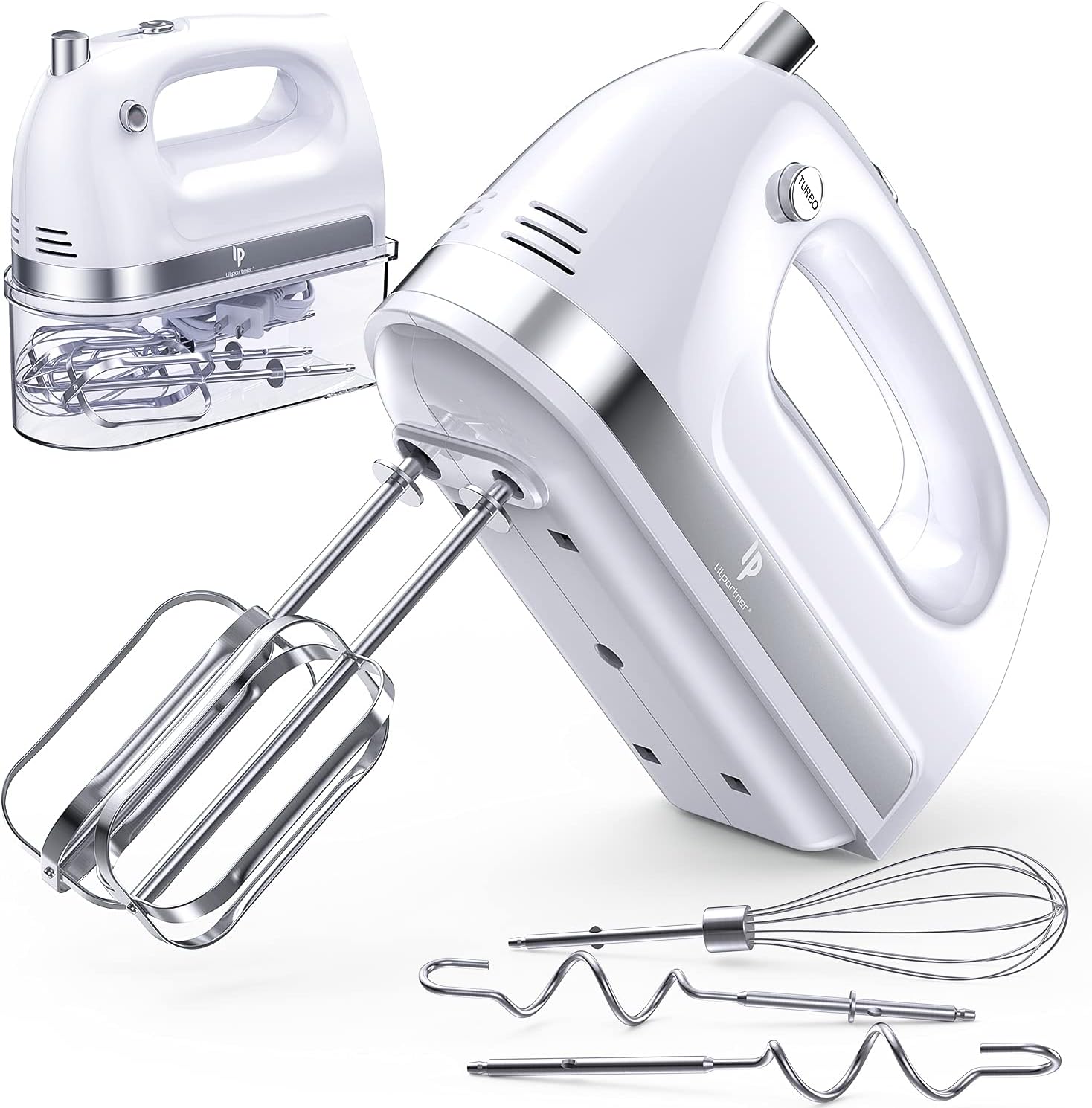
For egg whites, a balloon whisk attachment is your absolute best friend. Its thin wires are designed to incorporate a massive amount of air quickly and efficiently. Standard beaters can still get the job done, but it will take longer, and the resulting foam might be slightly less voluminous.
|
Our Picks for the Best Hand Mixer in 2025
As an Amazon Associate, we earn from qualifying purchases.
|
||
| Num | Product | Action |
|---|---|---|
| 1 | Hand Mixer Attachments Beater 6Pcs, Whisk, Blending Rod and Dough Hooks, Stainless Steel Hand Mixer Accessories for Kitchenaid Hand Mixers KHM3 KHM5 KHM7 KHM9, Dishwasher Safe |

|
| 2 | bella 3.5 Qt Hand & Stand Mixer, 2 in 1 Electric Mixer with Bowl, Dough Hook, Whisk & Egg Beater, Multifunctional Handheld Blender & Mixer for Baking, 200 Watt, Surf |
|
| 3 | Hand Mixer Electric, 450W Kitchen Mixers with Scale Cup Storage Case, Turbo Boost/Self-Control Speed + 5 Speed + Eject Button + 5 Stainless Steel Accessories, For Easy Whipping Dough,Cream,Cake |
|
| 4 | Hand Mixer Electric, 400W Food Mixer 5 Speeds Handheld Blender, 5 Stainless Steel Accessories, Storage Box, Kitchen Blender with Cord for Cream, Cookies, Dishwasher Safe, White |
|
| 5 | Hand Mixer Electric Mixing Bowls Set, 5 Speeds Handheld Mixer with 4 Nesting Stainless Steel Mixing Bowl, Measuring Cups Spoons 200W Kitchen Blender Whisk Beater Baking Supplies For Beginner |
|
| 6 | KitchenAid 9-Speed Digital Hand Mixer with Turbo Beater II Accessories and Pro Whisk - Contour Silver |
|
| 7 | Proctor Silex Easy Mix 5-Speed Electric Hand Mixer with Bowl Rest, Compact and Lightweight, 215 Watts of Peak Power, Storage Case, Black (62512) |
|
| 8 | KitchenAid 5 Ultra Power Speed Hand Mixer - KHM512, Matte Black |
|
| 9 | Ninja Hand Mixer, Immersion Blender, Foodi Power Mixer System, 750-Peak-Watt Handheld Emulsion Blender & Electric Hand Mixer Combo With Whisk, Beaters & 3-Cup Blending Vessel,120 volts, Black CI101 |
|
| 10 | Cuisinart HM-90BCS Power Advantage Plus 9-Speed Handheld Mixer with Storage Case, Brushed Chrome |
|
Hand Mixer vs. Stand Mixer vs. Whisk: Choosing Your Weapon
Is a hand mixer always the right choice? It depends on the task and the cook.
- Hand Mixer: The versatile champion. It’s perfect for small to medium batches of egg whites (2 to 8 whites). It gives you great control, allowing you to move the beaters around the bowl to ensure everything is evenly whipped. It’s also easy to store and clean.
- Stand Mixer: The powerhouse. For large batches (a dozen or more whites) or for recipes where you need your hands free to pour in hot sugar syrup (like for Italian meringue), a stand mixer is unbeatable. Its planetary mixing action is incredibly efficient.
- Manual Whisk: The purist’s tool. Whipping by hand gives you the ultimate control and a great arm workout. However, it takes significantly more time and effort to achieve stiff peaks. It’s fantastic for one or two egg whites for a simple cocktail foam or a small garnish.
Pro Tips from a Hand Mixer Aficionado
After countless pavlovas, macarons, and angel food cakes, I’ve picked up a few tricks that go beyond just speed control.
- Start with a Squeaky Clean Bowl: Any trace of fat or oil (from your fingers, a fleck of yolk, or residue on the bowl) will prevent your whites from whipping up properly. Wipe your bowl and beaters with a little vinegar or lemon juice, then rinse and dry thoroughly.
- Room Temperature is Key: Cold eggs are easier to separate, but room temperature egg whites whip up with more volume. Let your separated whites sit on the counter for about 30 minutes before you start.
- Use a Copper, Stainless Steel, or Glass Bowl: Plastic bowls can harbor invisible greasy residues that kill your foam. Stick to metal or glass for the most reliable results.
- Don’t Walk Away: A hand mixer works fast. What looks like soft peaks can turn into an over-whipped, grainy mess in less than a minute. Stay focused on the bowl.
Keeping Your Trusty Mixer in Tip-Top Shape
Your hand mixer is a workhorse, so treat it with a little respect. Proper cleaning and storage will ensure it’s ready for your next baking adventure.
- Unplug First: Always, always, always unplug the mixer before removing or attaching beaters.
- Eject and Wash: Eject the beaters or whisks. Most are dishwasher-safe (check your manual!), but a quick wash by hand with warm, soapy water is just as easy.
- Wipe Down the Body: Use a damp cloth to wipe down the main body of the mixer. Never submerge the motor housing in water.
- Store Smart: Wrap the cord loosely around the mixer body and store it in a dry cupboard. Many models come with a storage case to keep all the attachments together.
Frequently Asked Questions
What does it mean to over-whip egg whites?
Over-whipping is when you’ve gone past the stiff, glossy peak stage. The protein network becomes too tight and starts to break down, squeezing out the water. The result is a mixture that looks dry, grainy, and curdled. Unfortunately, once this happens, it’s very difficult to save.
How long does it take to whip egg whites with a hand mixer?
It typically takes between 3 to 7 minutes, depending on the power of your mixer, the number of eggs, and their temperature. Stage 1 (foamy) takes about 1 minute, Stage 2 (soft peaks) takes another 2-3 minutes, and Stage 3 (stiff peaks) takes a final 1-3 minutes.
Can you whip a single egg white with a hand mixer?
Yes, but it can be tricky in a large bowl. Use a smaller, deeper bowl so the beaters can make proper contact with the egg white. A single balloon whisk attachment is ideal for this task.
What is the difference between soft, firm, and stiff peaks?
It’s a visual progression. Soft peaks curl over completely when you lift the beaters. Firm peaks hold their shape but the very tip might slump slightly. Stiff peaks stand straight up, pointing to the sky without any drooping.
Why are my egg whites not whipping?
The most common culprits are: 1) A trace of egg yolk or fat in the bowl. 2) Using a plastic bowl. 3) The egg whites are too old. Fresher eggs have stronger proteins and whip up better.
Your Partner in Perfect Peaks
Mastering your hand mixer is one of the most empowering steps you can take in your home baking journey. Understanding what is the best speed for egg whites isn’t about memorizing numbers on a dial; it’s about learning to read the visual cues and working with your machine, not against it. By following the three-stage approach—starting low, building in the middle, and finishing high—you’re not just whipping egg whites; you’re building a stable, airy, and delicious foundation for countless incredible desserts. Now go grab those eggs and get mixing! We’d love to hear about your meringue triumphs in the comments below.