Welcome to the kitchen! You’ve got your chilled bowl, your high-quality heavy cream, and your trusty hand mixer. You’re just moments away from creating those luscious, cloud-like peaks of whipped cream. But then, the question hits you: What Is The Best Speed For Whipping Cream? It seems like a simple detail, but as anyone who’s ended up with a splattery mess or a bowl of buttery clumps can tell you, speed is everything. It’s the difference between culinary glory and a frustrating cleanup.
Think of it less as a race and more as a carefully controlled dance. Your hand mixer is a powerful tool, and learning to master its speed settings is the key to unlocking perfectly whipped cream, every single time. In this guide, we’re going to break it all down, step by step, so you can whip with the confidence of a seasoned pastry chef.
Why Hand Mixer Speed Is Your Secret Ingredient
Before we jump into the “how,” let’s talk about the “why.” Why can’t you just crank your mixer up to high and get it over with? The process of whipping cream is all about controlled aeration. You’re essentially forcing air bubbles into the cream, and the fat globules in the cream are forming a protective network around these bubbles.
- Starting too fast: This is like trying to build a house in a hurricane. You’ll splash cream everywhere, and the air bubbles you create will be large and unstable. They’ll collapse quickly, leaving you with a soupy result.
- Staying too slow: You’ll incorporate air, but you won’t have enough force to break down the fat globules and create that stable, lasting structure. You might get a slightly thickened cream, but you’ll never reach those beautiful peaks.
The secret lies in a gradual progression of speed, allowing the structure to build layer by layer, from a fluid liquid to a stable, airy foam.
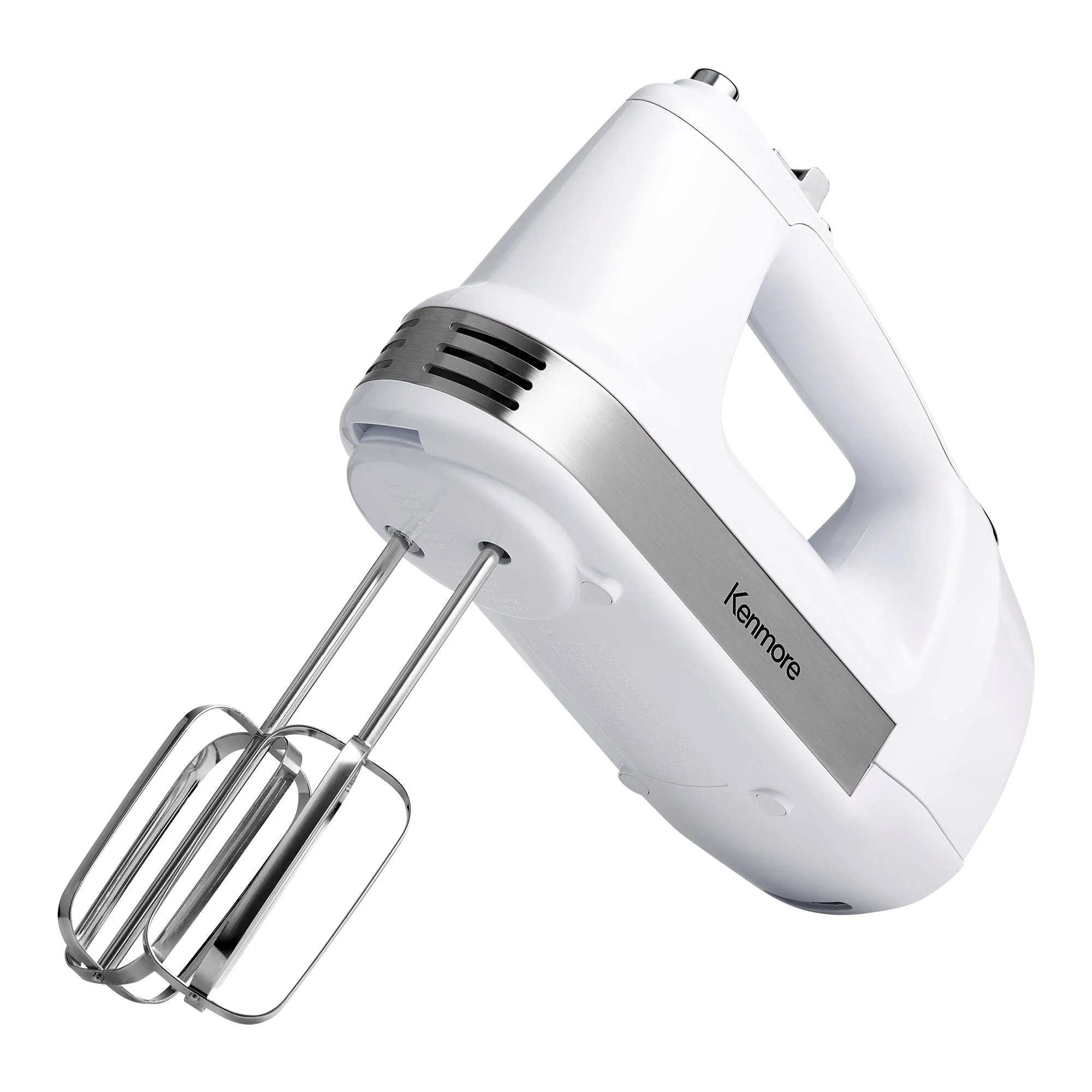
What Is the Best Speed for Whipping Cream? A Step-by-Step Method
Forget guesswork. The path to perfect whipped cream involves three distinct stages of speed. Grab your chilled bowl and let’s get started. For a deeper dive into choosing the right tool for the job, check out our [comprehensive hand mixer buying guide]().
Pre-Whip Checklist: Setting Yourself Up for Success
Before you even touch the speed dial, make sure you’ve done the following. This is non-negotiable!
- Chill Everything: Your heavy cream, your mixing bowl (metal or glass is best), and even the beaters from your hand mixer should be cold. Pop them in the fridge for at least 15-20 minutes beforehand. Cold fat whips up faster and creates a more stable emulsion.
- Use the Right Cream: Look for heavy cream or heavy whipping cream with at least 35% milk fat. The fat content is crucial for creating that rich structure.
Stage 1: The Low and Slow Start (Speeds 1-2)
- Pour your cold heavy cream into the chilled bowl.
- Insert your beaters and submerge them before turning the mixer on. This is a pro-tip to avoid that initial splatter.
- Start your hand mixer on the lowest speed setting. We’re talking speed 1 or 2.
- Keep it on low for about 30-60 seconds. The goal here isn’t to whip, but to gently break the surface tension and start creating small, uniform bubbles without splashing. You’ll see the cream start to get slightly foamy.
Expert Take: As pastry chef Eleanor Vance puts it, “The first minute on low speed is the foundation of your whipped cream. You’re laying the groundwork for a stable structure. Rushing this step is the most common mistake I see home bakers make.”
Stage 2: Building Volume (Speeds 3-5)
- Once the cream is foamy, it’s time to increase the speed to a medium setting. This would be around 3, 4, or 5 on most hand mixers.
- This is where the real magic happens. You’ll see the cream begin to thicken significantly. Keep the beaters moving around the bowl to ensure everything is being whipped evenly.
- After a couple of minutes, you’ll notice the tracks from your beaters starting to hold their shape for a second before disappearing. This is your cue that you’re approaching the “soft peak” stage.
Stage 3: The Final Polish (Speeds 5-7)
- As the cream becomes noticeably thick and the beater tracks are very clear, you can increase the speed slightly to medium-high.
- This is the stage to watch closely! Things happen very quickly from here. Stop the mixer every 20-30 seconds to check your progress. Lift the beaters out of the cream.
- Soft Peaks: The peak slumps over immediately, like a gentle wave. This is perfect for folding into mousses or topping a warm drink.
- Medium Peaks: The peak holds its shape for the most part, but the tip curls over. This is a great all-purpose stage, ideal for topping pies and cakes.
- Stiff Peaks: The peak stands straight up, proud and tall. It holds its shape completely. This is what you want for piping decorations.
- Once you reach your desired peak, STOP! Whipping for even 10-15 seconds too long can take you from perfect cream to a grainy, over-whipped mess.
Voice Search Corner: Your Quick-Fire Questions Answered
How long does it take to whip cream with a hand mixer?
It typically takes 3 to 5 minutes to whip cream with a hand mixer. The exact time depends on the fat content of the cream, how cold it is, and the power of your mixer.
Why won’t my cream whip?
The most common reasons cream won’t whip are that it isn’t cold enough or it doesn’t have a high enough fat content (less than 30%). Also, ensure your bowl and beaters are completely clean and free of any grease.
When should I add sugar and vanilla?
Add powdered sugar (which dissolves better than granulated) and vanilla extract when the cream reaches the soft peak stage. Adding them too early can inhibit the whipping process and reduce the final volume. Mix on low speed just until combined.
The Danger Zone: How to Spot and Fix Over-Whipped Cream
You got distracted for a moment, and now your cream looks a bit grainy and clumpy. Don’t panic! You’ve just started to turn your cream into butter.
- How to Spot It: The cream loses its smooth, glossy sheen and starts to look dull and slightly separated. It feels heavy, not airy.
- The Fix: Pour in a few tablespoons of fresh, un-whipped heavy cream. Then, using a spatula, gently fold it in by hand. Do not use the mixer! In many cases, this will be enough to smooth the cream back out. You might lose a little volume, but you’ll save it from the trash.
Hand Mixer vs. Stand Mixer vs. Whisk: Which is Best?
While we’re focused on our favorite handheld tool, it’s worth knowing how it stacks up.
| Tool | Pros | Cons | Best For |
|---|---|---|---|
| Hand Mixer | Excellent control, easy to store, affordable, versatile | Requires manual effort, less powerful for large batches | Small to medium batches, precise control over peaks |
| Stand Mixer | Hands-free, powerful, great for large batches | Bulky, expensive, can over-whip quickly if not watched | Large quantities, multitasking in the kitchen |
| Hand Whisk | Ultimate control, no electricity needed, quiet | Labor-intensive, takes much longer | Very small amounts, when you want a good arm workout |
For whipping cream, the hand mixer hits the sweet spot. It gives you the power to get the job done quickly but the tactile control to stop at the perfect moment—something that’s often harder to judge with a big stand mixer. If you’re looking to upgrade, our review of the [best hand mixers for avid bakers]() is a great place to start.
Frequently Asked Questions (FAQ)
Q1: Can I use half-and-half or light cream to make whipped cream?
No, you cannot. These products do not have enough milk fat content (typically 10-20%) to create the stable structure needed for whipped cream. You need at least 30-35% fat.
Q2: Does the type of bowl really matter?
Yes, it does. A metal or glass bowl is ideal because it retains cold temperatures very well. Plastic bowls can sometimes hold onto residual grease, which is the enemy of whipped cream, and they don’t stay cold as long.
Q3: How do I stabilize whipped cream so it lasts longer?
To make stabilized whipped cream that holds its shape for days, you can add a stabilizer like unflavored gelatin, cornstarch, or non-fat milk powder. Add the stabilizer along with the powdered sugar at the soft peak stage.
Q4: My hand mixer only has 3 speeds. How do I adapt this method?
It’s all about the same principle. Use speed 1 for the initial stage, speed 2 for building volume, and then switch to speed 3 for the final stage, stopping frequently to check your progress.
Q5: What’s the best way to clean the beaters?
The best way is to clean them immediately after use before the cream dries on them. Most beaters are dishwasher-safe (check your manual!), but a quick rinse and wash with warm, soapy water is usually all they need.
The Final Whip
Mastering what is the best speed for whipping cream transforms a simple kitchen task into an art form. It’s not about one single “best” speed, but about a thoughtful progression: start low to build the foundation, increase to medium to create volume, and finish on medium-high with a watchful eye to achieve perfection.
Your hand mixer is the perfect partner for this task, offering you power and precision in one compact package. The next time you set out to make a dessert, remember this guide. You’ll not only create the most delicious, stable whipped cream of your life but also gain a deeper appreciation for the incredible versatility of your hand mixer. Now, go forth and whip! We’d love to hear about your whipped cream adventures in the comments below.