Dreaming of fluffy, cloud-like whipped cream to adorn your desserts, but find the process a bit daunting? You’re not alone. Many home bakers consider perfect whipped cream a mystery, often ending up with either a runny mess or an over-whipped, grainy disaster. But what if we told you the secret to achieving sublime, stable whipped cream lies right in your hand—literally—with your trusty hand mixer? This versatile kitchen tool makes the task not just achievable, but surprisingly simple. With the right technique and a few expert insights, you’ll be whipping up irresistible cream toppings in no time.
The Magic of Homemade Whipped Cream and Your Hand Mixer
Whipped cream is, at its heart, heavy cream that has been aerated, transforming from a rich liquid into a light, airy foam. This transformation is thanks to the fat molecules in the cream, which trap air bubbles when agitated, creating a stable, voluptuous structure. The result is a decadent yet delicate topping that elevates almost any dessert, from pies and cakes to hot chocolate and fresh fruit.
While various tools can whip cream, the hand mixer stands out as an excellent choice for home cooks. It offers a perfect balance of control and efficiency, allowing you to easily monitor the cream’s consistency without the commitment or counter space required for a stand mixer. Its portability also means you can whip cream wherever is most convenient in your kitchen. Beyond classic dessert toppings, whipped cream finds its place in trifles, parfaits, and even savory dishes like cream soups or as a garnish for certain entrees. It’s a fundamental skill that unlocks a world of culinary possibilities.
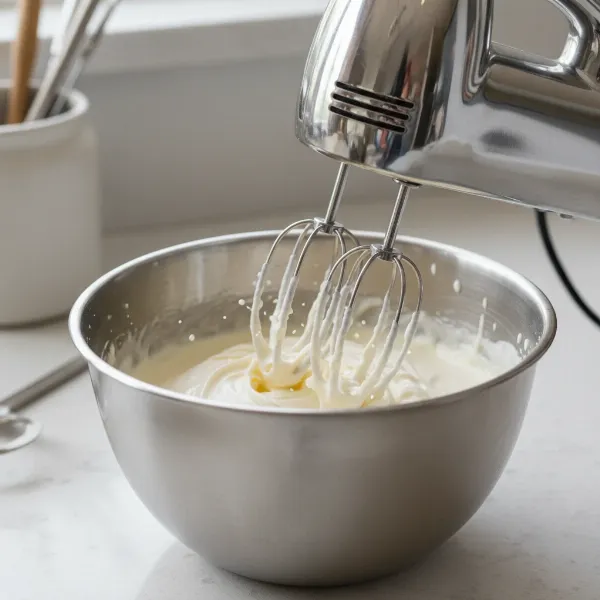 Hand mixer whipping heavy cream in a cold bowl, transforming liquid to fluffy peaks
Essential Ingredients and Equipment for Success
Achieving perfect whipped cream begins with selecting the right components and preparing your tools.
Heavy Whipping Cream
|
Our Picks for the Best Hand mixer in 2026
As an Amazon Associate I earn from qualifying purchases.
|
||
| Num | Product | Action |
|---|---|---|
| 1 | OVENTE 5-Speed Corded Electric Hand Mixer with Stainless Steel Whisks, Compact Portable Design with Snap-On Storage Case,150W Lightweight Handheld Mixer for Baking & Cooking, White HM151W |

|
| 2 | OVENTE 5-Speed Corded Electric Hand Mixer with Stainless Steel Whisks, Compact Portable Design with Snap-On Storage Case,150W Lightweight Handheld Mixer for Baking & Cooking, Black HM151B |
|
| 3 | Hamilton Beach 6-Speed Electric Hand Mixer with Whisk, Traditional Beaters, Snap-On Storage Case, 250 Watts, White |
|
| 4 | KitchenAid 5-Speed Ultra Power Hand Mixer - KHM512, Contour Silver |
|
| 5 | Maestri House Rechargeable Milk Frother with Stand, LunaFro Handheld Electric Foam Maker Waterproof Detachable Stainless Steel Whisk Drink Mixer Foamer for Lattes, Cappuccino |
|
| 6 | 600W Electric Hand Mixer Kitchen Handheld Mixer 10 Speed Powerful with Turbo for Baking Cake Lightweight & Personal Electric Mixer with Egg Baking Beaters Dough Hooks, Whipping Mixing Cookies |
|
| 7 | OVENTE 5-Speed Electric Hand Mixer with Stainless Steel Mixing Whisk, Snap-On Storage Case, Portable & Lightweight 150W Motor, Compact Handheld Mixer for Baking, Blending or Cooking, Red HM151R |
|
| 8 | KitchenAid 5-Speed Ultra Power Hand Mixer |
|
| 9 | KitchenAid 5 Ultra Power Speed Hand Mixer - KHM512, Aqua Sky |
|
| 10 | Wellness Extract Multi-Speed Rechargeable Electric Milk Frother, Li-ion Battery Powered – Certified Safe, Ideal for Coffee, Matcha, Protein & Colostrum |
|
The star of the show, heavy whipping cream, is non-negotiable. Look for cream with a fat content of at least 36% (often labeled “heavy cream” or “heavy whipping cream”). This high fat content is crucial for trapping air and creating a stable, fluffy texture. The colder the cream, the better. Chilled cream holds its structure more effectively and whips up faster.
Sweeteners
While optional, sugar adds a lovely sweetness and helps stabilize the cream. You have two primary choices:
- Granulated Sugar: This is common, but ensure it’s fine-grained. It can help the cream whip quicker but might leave a slight “crunch” if not fully dissolved, especially if added too late.
- Powdered (Confectioner’s) Sugar: Often preferred by professionals, powdered sugar contains a small amount of cornstarch, which acts as a stabilizer, helping the whipped cream hold its shape longer. It also dissolves more readily, resulting in a smoother texture. Aim for 1-2 tablespoons per cup of heavy cream, adjusting to your taste.
Flavorings
Vanilla extract is the classic choice, adding warmth and depth. Use about 1/2 to 1 teaspoon per cup of cream. Other flavorings like almond extract, coffee liqueur, citrus zest, or even a dash of cinnamon can add exciting variations to your whipped cream.
The Hand Mixer
Any standard hand mixer will do, but ensure it has clean, dry whisk or beater attachments. The whisk attachment is generally ideal for incorporating the most air, leading to a lighter, fluffier result.
Chilled Bowl and Beaters
This is arguably the most critical tip for success. Place your mixing bowl (metal or glass works best for retaining cold) and your hand mixer beaters in the freezer for 10-15 minutes before you begin. The colder everything is, the faster and more stable your whipped cream will be, as the cold temperature helps the fat molecules maintain their structure.
Step-by-Step: Mastering Whipped Cream with Your Hand Mixer
Follow these simple steps for consistently perfect whipped cream:
- Preparation is Key: Start by chilling your heavy cream, mixing bowl, and hand mixer beaters. A super cold environment is your best friend when whipping cream.
- Combine Ingredients: Pour the very cold heavy cream into your chilled bowl. If using, add your sugar and vanilla extract (or other flavorings) at this stage.
- Start Slow, Then Accelerate: Insert the beaters into the cream. Begin whipping on the lowest speed of your hand mixer. This helps prevent splattering and gently incorporates air without overworking the cream too quickly. Whip for about 30 seconds to 1 minute, until the cream starts to look frothy with small bubbles on the surface.
- Observe the Transformation: Once frothy, increase the speed to medium-high (around setting 4-6 on most mixers). Continuously move the mixer around the bowl, ensuring all the cream is evenly whipped. You’ll notice the cream gradually thickening and increasing in volume.
- Recognizing Peak Stages: As you whip, pay close attention to the consistency.
- Soft Peaks: The cream will hold its shape loosely, and when you lift the beaters, the peaks will droop gently.
- Medium Peaks: The cream will be firmer, and the peaks will hold their shape better but still have a slight curl at the tip.
- Stiff Peaks: The cream will be very firm, and the peaks will stand straight up when you lift the beaters. This stage nearly doubles the original volume of the liquid cream.
- The Critical Stop: This is the most crucial moment. Once your desired peak stage is reached, stop immediately. Over-whipping is easy to do and can quickly turn your fluffy cream into a grainy, curdled mess, or even butter. The consistency changes very quickly in the final stages, so watch it like a hawk!
Decoding Peak Stages: What You Need to Know
Understanding the different peak stages is essential for using whipped cream effectively in various recipes.
Soft Peaks
When you lift your mixer beaters, the cream will form gentle mounds that flop over like a soft-serve ice cream curl. The texture is light and airy. Soft peaks are ideal for a delicate topping on fresh fruit, hot chocolate, or a light dollop on a pie where you want a less structured finish.
Medium Peaks
At this stage, the cream will hold its shape more firmly. When you lift the beaters, the peaks will stand up but still have a slight curve or droop at the very tip. Medium peaks are a versatile choice, perfect for filling cakes, piping onto cupcakes, or as a sturdy topping that still feels luxurious.
Stiff Peaks
The cream will be thick and firm, and when you lift the beaters, the peaks will stand straight up without drooping. The texture is dense and holds its shape exceptionally well. Stiff peaks are best for intricate piping, making trifles that need structural support, or when you need the whipped cream to hold its form for an extended period. Be cautious at this stage, as it’s just a few seconds away from being over-whipped.
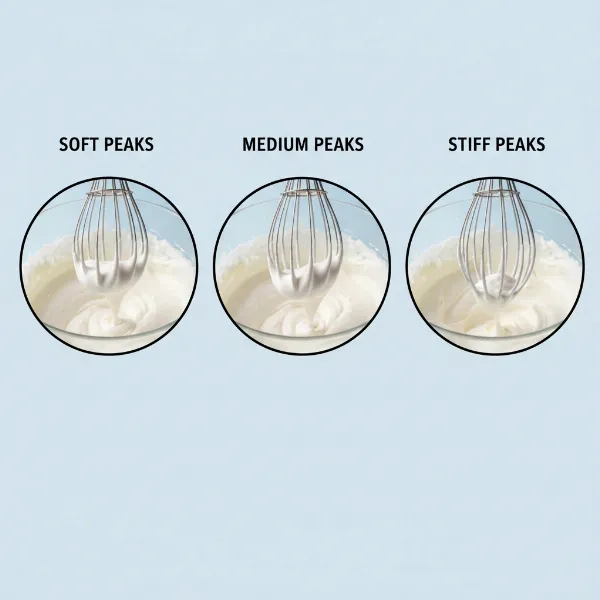 Visual guide showing soft, medium, and stiff peaks of whipped cream, ideal for various desserts
Troubleshooting Common Whipped Cream Woes
Even with the best intentions, whipped cream can sometimes be tricky. Here’s how to address common issues:
Cream Not Thickening
This is almost always due to the cream, bowl, or beaters not being cold enough, or using cream with insufficient fat content (e.g., half-and-half or light cream). Ensure all components are thoroughly chilled and that you are using heavy whipping cream. If it’s a hot day, you can place the mixing bowl over a larger bowl of ice water to help maintain a low temperature.
Over-Whipped Cream
The tell-tale sign of over-whipped cream is a grainy, slightly curdled texture. If it’s only slightly over-whipped, you might be able to salvage it by gently whisking in a tablespoon or two of cold liquid heavy cream by hand until it smooths out. However, if it has truly separated and looks like butter curds, it’s unfortunately too far gone and is on its way to becoming butter.
Cream Deflating Too Quickly
If your whipped cream quickly loses its volume and becomes runny, it’s likely due to one of two reasons: the cream wasn’t cold enough during whipping, leading to unstable air bubbles, or you whipped it at too high a speed too quickly from the start, creating large, weak air pockets. Starting on a lower speed helps create smaller, more stable bubbles. Powdered sugar also aids in stabilization.
Pro Tips for Hand Mixer Whipped Cream Perfection
Beyond the basic steps, these professional insights will ensure your whipped cream is consistently perfect:
- Keep Everything Consistently Cold: This cannot be stressed enough. If your kitchen is warm, work quickly, and consider whipping the cream in a bowl set over an ice bath.
- Scrape Down the Bowl Occasionally: As you whip, cream can stick to the sides of the bowl. Periodically pause your mixer and use a rubber spatula to scrape down the unwhipped cream into the center for even incorporation.
- Use a Deep Bowl: A deep, narrow bowl helps prevent splattering as the cream whips, keeping your kitchen cleaner.
- Don’t Walk Away! Whipping cream can go from perfect to over-whipped in mere seconds, especially in the final stages. Stay focused and watch the consistency closely.
- Know Your Mixer’s Speeds: Familiarize yourself with your hand mixer’s speed settings. Some have very powerful low settings, while others might need to be cranked up a bit more. Practice makes perfect!
Prolonging the Life of Your Whipped Cream
While best enjoyed fresh, you can store homemade whipped cream for later use.
Store leftover whipped cream in an airtight container in the refrigerator for up to 2-3 days. After this time, it tends to lose its volume and may weep (separate liquid).
If your stored whipped cream has slightly deflated but isn’t watery, you can often re-whip it for a few seconds with your hand mixer on medium speed to restore its fluffiness. Be very careful not to over-whip it. For longer storage, you can freeze dollops of whipped cream on a baking sheet, then transfer the frozen dollops to a freezer bag. They can be stored for up to a month and thawed in the refrigerator.
Your Hand Mixer for Whipping Cream: Key Considerations
While most hand mixers can whip cream, certain features enhance the experience and results.
- Power and Speed Settings: A hand mixer with multiple speed settings and a “turbo” button gives you precise control, crucial for starting slow and finishing strong without over-whipping. More power (higher wattage) generally means faster whipping, but control is paramount.
- Attachments: Ensure your hand mixer comes with whisk attachments (sometimes called balloon whisks). These are designed to incorporate more air efficiently than traditional flat beaters, yielding lighter, fluffier whipped cream.
- Ergonomics and Weight: Since you’ll be holding the mixer for a few minutes, a lightweight and ergonomically designed hand mixer will be more comfortable and easier to maneuver, allowing you to thoroughly reach all parts of the bowl.
- Durability and Brand Reputation: Investing in a reputable brand often means better build quality and more consistent performance, which translates to a longer-lasting tool that reliably whips cream for years to come.
Conclusion
Achieving perfectly whipped cream with a hand mixer is not a culinary enigma, but a simple process that hinges on cold ingredients, careful observation, and a bit of practice. From selecting the right heavy cream to understanding the nuances of peak stages, your hand mixer empowers you to create luxurious, airy toppings that elevate any dessert. Don’t be intimidated by the quest for perfection; embrace the ease and control your hand mixer offers.
So, go ahead, chill that bowl, pour that cream, and transform your everyday desserts into extraordinary delights. What delicious creation will you top with your perfectly whipped cream first?
Frequently Asked Questions
What kind of cream is best for whipping with a hand mixer?
Heavy whipping cream, or simply heavy cream, with a fat content of at least 36%, is ideal. Its high-fat content ensures that the cream can hold air effectively and create a stable, fluffy texture when whipped.
How long does it take to whip cream with a hand mixer?
The time varies depending on your mixer’s power, the amount of cream, and how cold your ingredients/equipment are, but typically it takes about 3 to 7 minutes to reach medium to stiff peaks. Keep a close eye on it, especially in the final minutes.
Can I use a hand mixer to make whipped cream from scratch without sugar?
Yes, absolutely! You can whip heavy cream without any added sugar or flavorings for a rich, unsweetened topping. The process remains the same, focusing on cold ingredients and careful whipping to achieve the desired consistency.
My whipped cream is watery and won’t thicken, what went wrong?
This usually happens if your cream, bowl, or beaters aren’t cold enough. Cream needs to be very cold for the fat molecules to properly emulsify and trap air. Ensure all your equipment and ingredients are thoroughly chilled before starting.
How do I fix slightly over-whipped cream?
If your whipped cream has just started to look slightly grainy, you might be able to rescue it by gently whisking in a tablespoon or two of cold, unwhipped heavy cream by hand until it smooths out. However, if it’s completely separated, it’s likely too far gone.
Should I use powdered sugar or granulated sugar for whipped cream?
Powdered (confectioner’s) sugar is generally recommended as it dissolves more easily and contains cornstarch, which helps stabilize the whipped cream and prevents it from weeping, resulting in a smoother, more stable finish. Granulated sugar can work but may leave a slightly grainy texture.
What’s the best way to store leftover whipped cream?
Store leftover whipped cream in an airtight container in the refrigerator for up to 2-3 days. While it’s best fresh, this method helps maintain its freshness and volume for a short period. You can also re-whip it briefly if it has lost some fluffiness.