Unlock the full potential of your hand mixer and transform your baking and cooking with a deeper understanding of its speed settings. Often underestimated, the humble hand mixer is a versatile kitchen powerhouse, but knowing when to use low versus high speeds, and precisely when to engage that turbo boost, is the secret to achieving culinary perfection. From preventing clouds of flour to whipping cream to fluffy peaks, mastering these controls will elevate your results and make kitchen tasks far more enjoyable.
The Science of Speed: Why Hand Mixer Settings Matter
Every ingredient reacts differently to varying mixing speeds. A gentle stir might just combine elements, while a rapid beat can incorporate air, creating volume and lightness. Understanding this fundamental principle is key to avoiding common mishaps like splattering batter across your kitchen or overworking dough, which can lead to tough baked goods. A crucial rule of thumb for any hand mixer task is to always start on the lowest setting and gradually increase the speed as needed. This simple practice prevents ingredients from flying out of the bowl and gives you greater control over the mixing process from the outset.
Low Speed (1-3): Gentle Beginnings and Precise Blending
Think of your hand mixer’s low settings as the gentle giant of your kitchen. These speeds are designed for delicate tasks that require careful incorporation without excessive aeration or mess.
- What it’s for: Folding, stirring, and gently combining ingredients. It’s perfect for when you need to bring elements together without overworking them or creating a dusty plume of dry ingredients.
- Ingredients/Tasks:
- Incorporating dry into wet: Slowly adding flour to wet ingredients for muffins, quick breads, or cake batters to prevent a flour explosion and ensure smooth blending.
- Folding in chunky additions: Gently mixing in nuts, chocolate chips, or dried fruit into batter.
- Starting dense mixtures: Initiating the mixing process for thicker cookie doughs or even some bread doughs to prevent the mixer from getting bogged down and to ensure initial ingredients are combined before increasing power.
- Pancake and Waffle Batters: Blending liquid and dry ingredients to a smooth consistency without developing gluten unnecessarily.
- Benefits: Minimizes splattering, ensures even distribution of ingredients, and prevents over-mixing that can lead to tough textures in baked goods. It provides a controlled start, allowing ingredients to come together before a more vigorous mixing is applied.
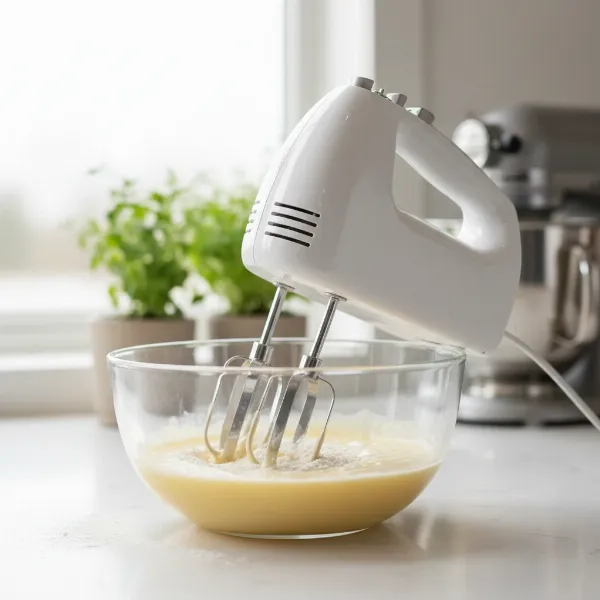 Hand mixer on low speed gently blending dry ingredients into a wet batter.
Medium Speed (4-6): The Workhorse for Everyday Baking
The medium speed range is where most of your standard baking tasks will take place. It provides a balance of power and control, ideal for achieving creamy textures and thoroughly combined mixtures without over-processing.
- What it’s for: Creaming, combining, and blending ingredients that require more force than a gentle stir but less aeration than whipping.
- Ingredients/Tasks:
- Creaming butter and sugar: This essential step for many cookie and cake recipes uses medium speed to incorporate air, making the mixture light and fluffy.
- Cookie Doughs: Blending most cookie doughs to a uniform consistency, effectively incorporating all ingredients without making the dough tough.
- Cake Batters: Mixing packaged cake mixes or homemade cake batters to a smooth, well-combined state.
- Frostings and Icings: Preparing smooth and consistent frostings, ensuring all ingredients are fully blended.
- Mashed Potatoes: Achieving smooth, lump-free mashed potatoes.
- Benefits: Ensures thorough mixing, develops the right texture for a wide array of baked goods, and efficiently combines heavier mixtures.
High Speed (7-9+): Power for Peaks and Smoothness
When you need serious power to incorporate air or achieve ultra-smooth textures, the high-speed settings are your go-to. These settings are designed for tasks that demand vigorous beating and whipping.
- What it’s for: Whipping, beating, aerating, and emulsifying. These speeds rapidly incorporate air, creating volume and lightness.
- Ingredients/Tasks:
- Beating Egg Whites: Achieving stiff, glossy peaks for meringues, soufflés, or light batters. High speed rapidly creates the air bubbles necessary for structure.
- Whipping Heavy Cream: Transforming liquid cream into fluffy, stable whipped cream for desserts.
- Meringue Mixtures: Whisking egg whites and sugar to form stable meringue.
- Mousse: Creating light and airy dessert mousses.
- Emulsifying: Combining liquids that normally separate, like in some salad dressings or mayonnaise, to create a stable emulsion.
- Milkshakes: Blending ingredients quickly for a perfectly smooth drink.
- Benefits: Incorporates maximum air for light and fluffy results, creates smooth and uniform consistencies, and dramatically reduces mixing time for specific tasks.
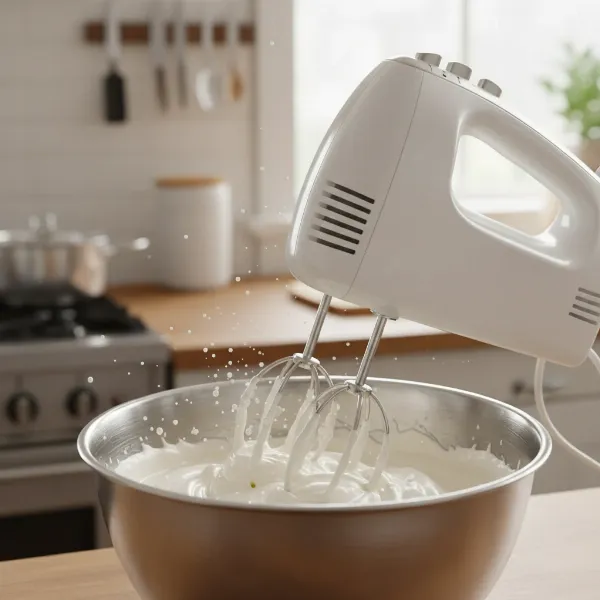 Hand mixer on high speed whipping heavy cream to form soft peaks in a bowl.
Turbo Boost: When You Need That Extra Kick
Many modern hand mixers come equipped with a “Turbo” button. This isn’t usually an additional speed level but rather a temporary, instantaneous burst to the mixer’s maximum power setting, or even slightly beyond. It’s your secret weapon for those moments when you need a little extra oomph.
- What it is: A momentary surge to the absolute maximum power the hand mixer can deliver, typically sustained only while the button is pressed.
- When to use it:
- Breaking up stubborn lumps: A quick burst can effectively dislodge any persistent lumps in a batter or sauce.
- Finishing a task quickly: If you’re close to the desired consistency and just need a final, rapid whisk.
- Tackling very thick mixtures: For a brief moment, it can provide the extra torque needed to get through particularly dense cookie doughs or heavy batters that might be straining the motor on regular high speeds.
- Emergency bursts: A quick press can help re-incorporate ingredients that have settled or separated slightly.
- When not to use it: Avoid using the turbo function for delicate folding, at the very beginning of mixing dry ingredients (unless you enjoy cleaning flour off your ceiling), or for extended periods, as it can overmix ingredients quickly. While a helpful feature, some expert bakers note that if your mixer’s highest regular speed is already robust, the turbo function might feel less essential.
Common Mistakes to Avoid with Hand Mixer Speeds
Even seasoned bakers can sometimes fall prey to common hand mixer speed mistakes. Being mindful of these can save you time, effort, and ingredients.
- Starting too high: The most frequent error, leading to ingredients splattering out of the bowl and a messy cleanup. Always begin on the lowest speed.
- Overmixing: Using a high speed for too long, especially with flour-based batters, can overdevelop gluten, resulting in tough cakes, chewy cookies, or deflated meringues. Follow recipe times and visual cues for consistency.
- Under-mixing: Not using enough speed or mixing for too short a time can leave you with uneven textures, un-creamed butter and sugar, or lumpy batters.
- Ignoring ingredient consistency: Different ingredients demand different speeds. Attempting to whip egg whites on a low speed will take forever, while trying to gently fold berries into batter on high speed will turn them into mush.
Tips for Optimal Hand Mixer Use
Becoming a hand mixer maestro is all about practice and paying attention. Here are a few expert tips to help you get the most out of your appliance:
- Always start on the lowest setting: This cannot be stressed enough. It’s the golden rule for preventing messes and gaining control.
- Read your recipe’s instructions: Recipes often specify speed settings, especially for delicate mixtures like meringues or whipped cream.
- Scrape down the bowl frequently: Even with careful mixing, ingredients can cling to the sides of the bowl. Pause your mixer and scrape down the sides with a spatula to ensure everything is evenly incorporated.
- Choose the right attachment: Use standard beaters for general mixing and creaming, a whisk attachment for aerating (egg whites, cream), and dough hooks for kneading heavier bread doughs.
- Listen to your mixer and watch the consistency: Your mixer’s sound can indicate if it’s struggling. More importantly, observe the texture and appearance of your mixture. Is it getting lighter? Smoother? Reaching the desired consistency? Let these cues guide your speed adjustments.
Conclusion
Your hand mixer is more than just a motor with spinning attachments; it’s a precision tool when wielded correctly. By understanding the nuances of its speed settings – from the gentle incorporation of low speeds, through the consistent blending of medium settings, to the powerful aeration of high speeds and the quick bursts of turbo – you gain unparalleled control over your culinary creations. This knowledge not only enhances your baking and cooking outcomes, ensuring perfect textures and consistencies, but also makes your time in the kitchen more efficient and enjoyable. So, go ahead, experiment with confidence, and let your hand mixer elevate your next dish. What’s your favorite hand mixer speed trick that has transformed your recipes?
Frequently Asked Questions
How many speeds do I really need on a hand mixer?
|
Our Picks for the Best Hand mixer in 2026
As an Amazon Associate I earn from qualifying purchases.
|
||
| Num | Product | Action |
|---|---|---|
| 1 | Maestri House Rechargeable Milk Frother with Stand, LunaFro Handheld Electric Foam Maker Waterproof Detachable Stainless Steel Whisk Drink Mixer Foamer for Lattes, Cappuccino |

|
| 2 | OVENTE 5-Speed Corded Electric Hand Mixer with Stainless Steel Whisks, Compact Portable Design with Snap-On Storage Case,150W Lightweight Handheld Mixer for Baking & Cooking, Black HM151B |
|
| 3 | KitchenAid 5 Ultra Power Speed Hand Mixer - KHM512, Aqua Sky |
|
| 4 | Wellness Extract Multi-Speed Rechargeable Electric Milk Frother, Li-ion Battery Powered – Certified Safe, Ideal for Coffee, Matcha, Protein & Colostrum |
|
| 5 | KitchenAid 5-Speed Ultra Power Hand Mixer |
|
| 6 | Hamilton Beach 6-Speed Electric Hand Mixer with Whisk, Traditional Beaters, Snap-On Storage Case, 250 Watts, White |
|
| 7 | 600W Electric Hand Mixer Kitchen Handheld Mixer 10 Speed Powerful with Turbo for Baking Cake Lightweight & Personal Electric Mixer with Egg Baking Beaters Dough Hooks, Whipping Mixing Cookies |
|
| 8 | KitchenAid 5-Speed Ultra Power Hand Mixer - KHM512, Contour Silver |
|
| 9 | OVENTE 5-Speed Corded Electric Hand Mixer with Stainless Steel Whisks, Compact Portable Design with Snap-On Storage Case,150W Lightweight Handheld Mixer for Baking & Cooking, White HM151W |
|
| 10 | OVENTE 5-Speed Electric Hand Mixer with Stainless Steel Mixing Whisk, Snap-On Storage Case, Portable & Lightweight 150W Motor, Compact Handheld Mixer for Baking, Blending or Cooking, Red HM151R |
|
While some hand mixers boast 7, 9, or even more speeds, most home bakers find that a model with at least 5 distinct speeds is perfectly adequate. This typically provides a good range for stirring, mixing, creaming, and whipping, covering the vast majority of recipes. More speeds offer finer control, but 5-7 speeds are generally sufficient for versatile use.
Can I use high speed for all mixing?
No, using high speed for all mixing tasks is a common mistake that can lead to undesirable results. Starting with high speed causes splattering and uneven mixing, while prolonged use can overdevelop gluten in batters, making baked goods tough, or over-aerate delicate mixtures, causing them to collapse. Reserve high speeds for specific tasks like whipping cream or beating egg whites.
Why does my mixer splatter even on low speed?
If your mixer splatters even on a low setting, several factors might be at play. The most common reasons include a bowl that’s too shallow or wide for the amount of ingredients, adding dry ingredients too quickly (creating a “flour cloud”), or a mixer that simply has a very powerful low setting. Try using a deeper bowl, slowly incorporating dry ingredients by hand first, or if possible, use very short pulses to initially combine.