Imagine a kitchen where your creativity isn’t tethered by power outlets. A world where you can whip up meringue or cream butter anywhere, from your spacious island to a cozy corner. This is the promise of the KitchenAid Cordless Hand Mixer, a game-changer for home bakers and culinary enthusiasts alike. But beyond the undeniable allure of cordless freedom, a crucial question remains: how does its battery truly perform, and does it deliver the reliable power KitchenAid is known for? This review dives deep into the heart of this innovative appliance, focusing on its battery life, charging capabilities, and overall performance to help you decide if it’s the perfect addition to your kitchen arsenal.
The Freedom of Cordless Mixing: What the KitchenAid Hand Mixer Offers
The KitchenAid Cordless Hand Mixer, often seen in its 7-speed iteration, is designed for those who value flexibility and convenience in the kitchen. Powered by a 12V MAX rechargeable battery, this mixer liberates you from the hunt for an available wall socket, allowing you to move freely around your workspace. This means no more tangled cords, no more limitations on where you can mix, and a generally smoother, more enjoyable baking experience. It’s more than just a hand mixer; it’s an invitation to mix, whip, and stir wherever inspiration strikes.
Battery Life Test: How Long Does the KitchenAid Cordless Hand Mixer Truly Last?
One of the most critical aspects of any cordless appliance is its battery endurance. KitchenAid states that its cordless hand mixer can deliver approximately 45 to 60 minutes of continuous mixing runtime on a full charge. For practical bakers, this translates to an impressive capacity to prepare around 200 cookies, or roughly four batches of chocolate chip cookies.
In real-world usage, this performance often holds true. Many users report being able to tackle multiple baking projects, such as whipping egg whites, creaming butter and sugar, or mixing cake batters, before needing to recharge. Some even find that with regular weekend baking, they only need to charge the mixer about once a month, seamlessly integrating it into their routine without ever reaching for a corded backup. However, it’s worth noting that actual run time can vary based on several factors, including the specific recipe (thicker batters demand more power), the speed setting used, the attachments chosen, and the overall age and usage patterns of the battery. Yet, the consensus remains that the battery provides ample power for most common kitchen tasks.
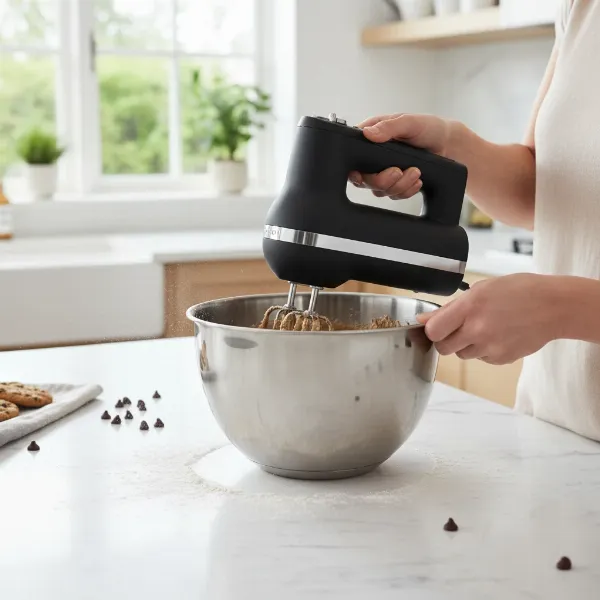 A woman using a KitchenAid cordless hand mixer to prepare cookie dough in a modern kitchen
Charging Up: Speed and Indicators
When it’s time to recharge, the KitchenAid Cordless Hand Mixer is designed for efficiency. A full charge takes approximately two hours, ensuring minimal downtime between your culinary endeavors. For those moments when you’re in a hurry and just need a quick boost, the mixer also features a rapid charging capability: a mere 10-minute quick charge can provide enough power to stir up a cake batter recipe.
The mixer is equipped with a clear battery status indicator light. This indicator pulses while the unit is charging, giving you a visual cue of its progress, and turns a solid green once it reaches a full charge. It’s important to remember that, unlike some devices, the KitchenAid Cordless Hand Mixer cannot be used while it is actively charging. This design choice ensures safety and optimal charging cycles.
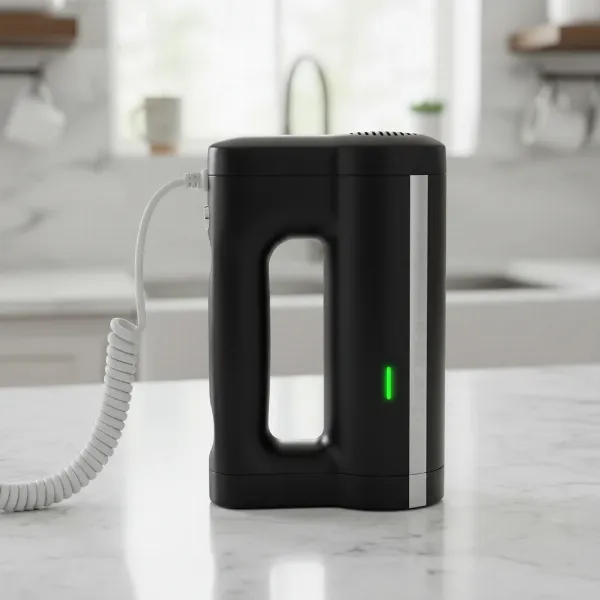 KitchenAid cordless hand mixer connected to its charger, with a green battery indicator light
Power and Performance: Does Cordless Mean Compromise?
A common concern with cordless appliances is whether they can match the power and consistency of their corded counterparts. With the KitchenAid Cordless Hand Mixer, most users find that there is no discernible drop in power compared to traditional corded models for the majority of mixing tasks. It capably handles a wide range of ingredients and preparations, from gently folding in dry ingredients to vigorously whipping heavy cream and egg whites to stiff peaks.
While its performance is robust, some very specific, rigorous tasks might reveal subtle differences. One reviewer noted that when whipping 100 grams of heavy cream, the cordless model was about 10 seconds slower than an 8-year-old wired mixer at its highest setting. However, for the vast majority of home baking and cooking needs, the mixer provides consistent and ample power. Its Soft Start feature is another welcome addition, gradually bringing the beaters up to speed to prevent ingredients from splattering, ensuring a cleaner mixing experience.
The KitchenAid Cordless Ecosystem: More Than Just a Hand Mixer
The 12V MAX battery powering the KitchenAid Cordless Hand Mixer isn’t an isolated component; it’s part of a larger, interconnected system. This battery is compatible with the entire KitchenAid Go Cordless range of appliances. This means if you invest in other KitchenAid Go Cordless tools, such as a food chopper or a hand blender, you can potentially use the same interchangeable battery across multiple devices. This shared battery system offers enhanced convenience, reduces clutter from multiple chargers, and can be a significant advantage for those looking to build a versatile, cord-free kitchen setup.
Design and User Experience Beyond the Battery
Beyond its impressive battery and performance, the KitchenAid Cordless Hand Mixer boasts a thoughtful design that enhances the user experience. It is generally described as lightweight and ergonomic, making it comfortable to hold and maneuver even during longer mixing sessions. The mixer also features a convenient flat base, allowing it to stand upright on its own when not in use or when you need to pause mid-recipe, keeping your countertops cleaner and your workspace organized. Cleaning is also straightforward, as its beaters are dishwasher safe. Furthermore, early reports suggest good durability and long-term battery performance, with some users experiencing no noticeable power degradation even after a year of consistent use.
Is the KitchenAid Cordless Hand Mixer Right for You? Pros and Cons
Like any kitchen appliance, the KitchenAid Cordless Hand Mixer comes with its own set of advantages and considerations.
Pros:
- Unmatched Cordless Freedom: Mix anywhere, anytime, without outlet restrictions.
- Solid Battery Life: Up to 60 minutes of continuous use, enough for multiple tasks or batches.
- Quick Charge Capability: A 10-minute charge can get you through a cake batter.
- Consistent Power: Performs reliably for most common mixing needs.
- Versatile: Seven speeds and Soft Start feature for varied recipes.
- User-Friendly Design: Lightweight, ergonomic, self-standing, and easy to clean.
- Ecosystem Compatibility: Battery works with other KitchenAid Go Cordless tools.
Cons:
- Charging Time: While reasonable, a full two-hour charge means planning ahead.
- Slight Power Nuance: For the absolute heaviest, densest batters or intense whipping, some corded models might offer a fraction more raw speed, though this is rarely an issue for typical use.
- Initial Cost: Cordless technology often comes with a slightly higher upfront investment.
Conclusion
The KitchenAid Cordless Hand Mixer stands as a testament to convenience meeting capability in the modern kitchen. Its robust battery life, efficient charging, and consistent performance genuinely free you from the limitations of cords, making baking and cooking more flexible and enjoyable. While a full charge requires a couple of hours and it can’t be used while plugged in, the freedom it offers far outweighs these minor considerations for many home cooks. If you value a clutter-free countertop, the ability to mix anywhere, and reliable power for your everyday recipes, this cordless wonder is a compelling choice. Will you embrace the cordless revolution in your kitchen?
Frequently Asked Questions
How many cookies can the KitchenAid Cordless Hand Mixer make on a single charge?
|
Our Picks for the Best Hand mixer in 2026
As an Amazon Associate I earn from qualifying purchases.
|
||
| Num | Product | Action |
|---|---|---|
| 1 | Wellness Extract Multi-Speed Rechargeable Electric Milk Frother, Li-ion Battery Powered – Certified Safe, Ideal for Coffee, Matcha, Protein & Colostrum |

|
| 2 | 600W Electric Hand Mixer Kitchen Handheld Mixer 10 Speed Powerful with Turbo for Baking Cake Lightweight & Personal Electric Mixer with Egg Baking Beaters Dough Hooks, Whipping Mixing Cookies |
|
| 3 | Hamilton Beach 6-Speed Electric Hand Mixer with Whisk, Traditional Beaters, Snap-On Storage Case, 250 Watts, White |
|
| 4 | Maestri House Rechargeable Milk Frother with Stand, LunaFro Handheld Electric Foam Maker Waterproof Detachable Stainless Steel Whisk Drink Mixer Foamer for Lattes, Cappuccino |
|
| 5 | KitchenAid 5-Speed Ultra Power Hand Mixer |
|
| 6 | KitchenAid 5 Ultra Power Speed Hand Mixer - KHM512, Aqua Sky |
|
| 7 | KitchenAid 5-Speed Ultra Power Hand Mixer - KHM512, Contour Silver |
|
| 8 | OVENTE 5-Speed Electric Hand Mixer with Stainless Steel Mixing Whisk, Snap-On Storage Case, Portable & Lightweight 150W Motor, Compact Handheld Mixer for Baking, Blending or Cooking, Red HM151R |
|
| 9 | OVENTE 5-Speed Corded Electric Hand Mixer with Stainless Steel Whisks, Compact Portable Design with Snap-On Storage Case,150W Lightweight Handheld Mixer for Baking & Cooking, White HM151W |
|
| 10 | OVENTE 5-Speed Corded Electric Hand Mixer with Stainless Steel Whisks, Compact Portable Design with Snap-On Storage Case,150W Lightweight Handheld Mixer for Baking & Cooking, Black HM151B |
|
The KitchenAid Cordless Hand Mixer is designed to prepare approximately 200 cookies, which typically equates to four batches of chocolate chip cookies, on a single, full charge. Actual results may vary based on the recipe and mixing intensity.
Can I use the KitchenAid Cordless Hand Mixer while it’s charging?
No, the KitchenAid Cordless Hand Mixer cannot be operated while it is connected to its charger. This design ensures safety and optimizes the battery’s charging cycle.
Is the KitchenAid Cordless Hand Mixer as powerful as a corded mixer?
For most standard kitchen tasks like creaming, mixing, and whipping, the KitchenAid Cordless Hand Mixer delivers comparable power to many corded models. While it might be marginally slower on exceptionally heavy loads or extended whipping tasks, it generally provides consistent and reliable performance for everyday use.
How long does the battery last on the KitchenAid Cordless Hand Mixer?
The KitchenAid Cordless Hand Mixer offers between 45 to 60 minutes of continuous mixing runtime on a full charge. This duration can accommodate multiple recipes or several smaller tasks before needing to be recharged.